Your Smart Guide to Quality Blinds
Wiki Article
Your Blinds Can Be Used As A Sunscreen To Safeguard Your Home.
In Australian homes, sunlight is now a precious commodity. The warmth and joy it brings are sought-after however, we also need to take care of its darker aspects. The intense UV radiation and the penetrating heat can turn a rug into an old memory, or turn the living area into a sweaty midday space. Blinds are not just about design and privacy, but it's also about protecting the environment. Your blinds are the primary protection against Australian heat. Knowing how the materials manage UV and heat can help preserve your interior, comfort, and cooling budget. It's about choosing an appropriate barrier, not simply an enclosure.
The danger on our windows comes in two ways. The first is UV radiation which is found in Australia ranks among the most intense in the world. This invisible energy doesn't just cause a sunburn as it also shatters molecular bonds in fabrics and dyes. This invisible force can fade artwork and photographs behind their glass, turning vibrant red cushions pink. Another reason is the solar heat gain. This infrared energy turns the glass into radiant heaters. The warmth can flood your rooms and force air conditioners to operate harder and increase energy costs. Blinds that provide only shade is fighting only half the battle. The top ones are designed to control both light and thermal energy.
The range of protection begins with simple light filtering. Simple, non-lined fabrics such as Roman or roll up blinds can reduce glare and provide privacy but only offer a limited amount of protection from UV and Heat. They can act as a shield against the sun, but not against your eyes. If you're looking for true protection, then look at specialised fabrics and weaves.
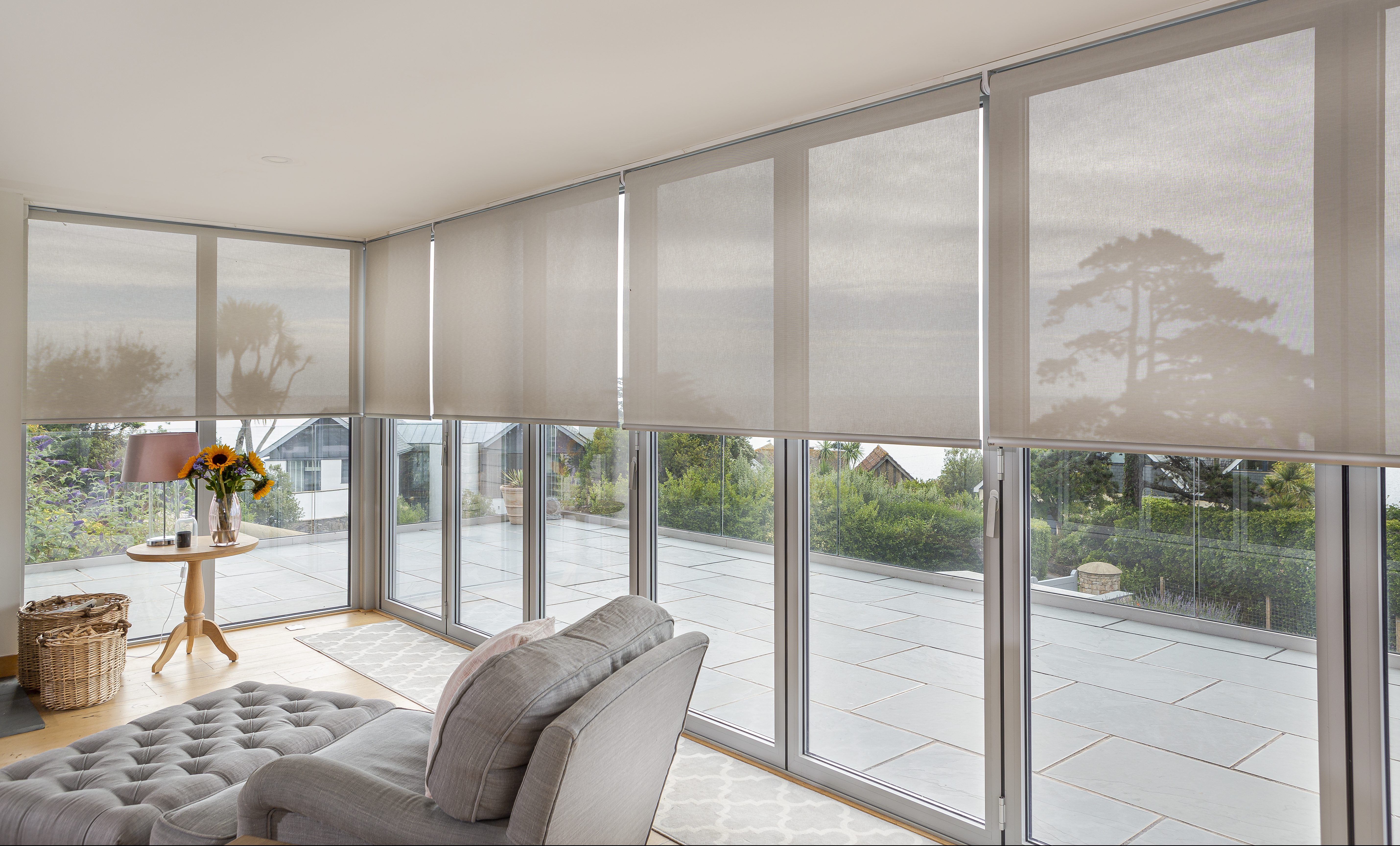
The most popular is the sunscreen or filter weave. This is a fine-grained textile that is typically made of synthetic material covered with PVC. Its genius is in its specific filtration. It diffuses harsh direct sun into a soft and pleasant glow. You can still see the world outside, but it blocks a substantial percentage of UV rays, typically between 90 and 95%. It's similar to a pair of permanent quality sunglasses. It's a stylish and trendy option for spaces that require light but without damaging the room, such as living spaces and sunrooms. It can also be used as a home office or. The effectiveness of the fabric is determined by its Openness Factor (the percentage of open space within the weave) as well as its UV Blockout rating; a skilled supplier will be able to provide this technical data.
Blockout materials are ideal in situations that require complete defense. They're extremely dense and tightly knit. They're almost always coated with a layer or acrylic. They offer near-total (99.5%+) protection from UV and light. When fully lowered they produce the appearance of a darkroom, which is essential for media rooms, bedrooms or windows that face the fierce western sun. The additional benefit they provide is thermal insulation. The air barrier they create in the windows can reduce heat transfer dramatically. The summer heat is sucked out, and winter warmth stays inside. The most advanced versions feature reflective, usually metallic, backing that redirects solar energy off the glass.
Structural design is also an important part, as illustrated by honeycomb blinds or cellular blinds. Their unique hexagonal folded is an engineering marvel. The vertical pockets hold air and create an insulating layer which reduces heat's movement. Imagine your blind as double-glazed. They offer superior UV protection thanks to their dense fabric walls. They also provide top thermal performances year-round. The interiors are kept warmer and cooler during the summertime. They are energy efficient and are often the top performer.
It's important to consider more than just the colour in the front. Ask questions about the treatment and composition. Solution-dyed textiles (like acrylics, polyesters and nylons) contain colour in the fibre itself. They are, therefore, more fade resistant. Look out for UV-inhibitor treatments added to fabrics during the process of production. In the case of PVC or vinyl, the thickness and the quality of the material determines how long they last and the degree of durability they will have under the constant exposure to sunlight.
The conversation that you engage in with your supplier needs to be objective, not subjective. Ask the revealing questions: "What is this fabric's particular UV block rate?" Does it have thermal or reflective backing? "What is the typical time to fade this product for a north-facing window?" The service you choose should be able to answer these questions. They will also likely ask what the window faces and the type of material you want to use. They understand the difference between a blind that is appropriate for bedrooms facing south, and a blind which is appropriate for a lounge facing north with silk furniture.
The last, and often overlooked element is performance and fit. The gaps can compromise the most sophisticated material. For "light leakage" to be prevented it is essential to ensure that a blind is snugly fitted to the recess in its frame or overlapped properly. The user's comfort will determine the frequency at which the blind is deployed. A blind that is heavy can remain open, which defeats its intended purpose. A smooth, motorised, and cordless operation is a great way to make sure you use it regularly.
The long-term advantage of blinds is that they offer thermal and UV protection. It is an investment in the protection of your furniture, flooring as well as artwork. It is an efficient investment since it lessens the stress on your cooling systems and reduces your energy bills. And it is an investment in liveability--creating comfortable, glare-free spaces that are a joy to inhabit throughout the day's changing light.
In Australia the sun is always active and strong. Therefore blinds serve a function more than just decorative purposes. They are an integral part of your home's climate control system. By choosing the right material, you can let in light at your own pace and enjoy the view without spending a lot, and keep the colours of your home vibrant for many years to come. It's fundamentally the most effective use of shade as a tool to ensure a comfortable and sustainable lifestyle. View the top rated blinds for site info including blinds order online, direct blinds online, blinds made, blinds 101, blinds to be fitted, blinds direct installation, high blinds, factory direct blinds near me, made to order blinds, quality window shades and more.

The Silent Change: How Motorised Blinds Are Slowly Redefining The Australian Home.
Blinds are a simple product that's been utilized by Australians for a long time. Simple physical gestures mark the rhythms of daily life in a home: a tug on a cord or a turn of the wand. A gradual change in the design of homes is taking place, not due to an alteration in the fabric, but due to a shift in purpose. Motorisation, previously thought to be a futuristic item, is fast becoming an essential, practical consideration for Australian households. Blinds aren't an inflexible covering, but rather an integrated system that offers security and convenience and also opens up the potential for energy-efficiency and modern living. The goal is not to eliminate the cord, but rather to reconsider the way blinds can accomplish.
Let's start with the most immediately appealing aspect simple, easy convenience. Think about the Australian architectural design that is typical: the bank window, tall glass door, or the hard-to-access skylight. It's hard to manually operate multiple covers over a tall or large space. With motorisation, a single command--a button on a remote, a tap on a smartphone, or a voice instruction--orchestrates the entire scene. Blinds can be adjusted in the living room to block out the afternoon sun. Open the blinds in the bedroom, from the bed, and greet the dawn. This can transform spaces that have lots of windows or large ones. An uninteresting task can become routine day routine. The mechanics are top-quality. A high-quality, reliable motor will provide a consistent quiet, smooth operation. This will eliminate the jerks that are caused by manual systems and also slips or irregular alignment.
It also provides the second major benefit for Australia: increased efficiency of energy. The control of temperature within our homes is the biggest energy consumption for households. Motorisation is a method of allowing for timed, strategic operation that is not possible to achieve through manual operation. Your blinds can be active participant in the microclimate control of your house by integrating with an intelligent system or simple timer. They can be set to automatically lower by 11 am in order to block out the hot summer sun. This will prevent heat build-up from happening. They could be set to be opened in the morning, to let passive solar heat in and closed at dusk, acting as an insulation layer. This approach reduces the burden on air conditioners and heating systems, which results in lower electric costs. Automating to improve comfort and save energy.
Safety is a powerful argument that has two sides. First, it offers the best solution to child safety. It eliminates cords and chain completely, taking strangulation danger at the source. It is line with Australian safety standards, and is in fact higher than the standards. It offers absolute peace-of-mind to parents and grandparent. It also enhances home security. Blinds that are able to move in a random manner can be a deterrent for would-be burglars looking for signs of a home that is not being used. Smart blinds that can simulate occupancy even when you're away will raise and lower at various dates. Blinds that are manually operated or with static clocks are not able to do this. This adds security directly to your everyday routine.
The true potential of motorisation can only be achieved through integration and smart eco-systems. Modern motorised blinds aren't created in isolation, they're built to connect. They can be integrated with various platforms like Amazon Alexa, Google Home and Apple HomeKit, which allows voice-controlled control ("Hey Google! Open the blinds to your living room"). Additionally, they can become a scene in a broader intelligent home automation. Imagine the scene of "Good Morning" trigger from your alarm clock, that gradually raises the blinds on the bedroom, activates the gentle lights and starts the coffee maker. The "Away' scene locks the doors, sets alarms, and shuts the blinds to ensure the security of your home. Integration with sensors could be used to lower blinds when the temperature of a room gets to a certain degree or to close them at sunset based on the whereabouts. It is a way to shift control away from a reactive environment and into a responsive intelligent environment that can be adapted to your life.
Australians are now able to take this step with greater ease. Retrofit solutions now allow motorisation of existing blinds with headrails that are compatible, without having to completely replace the blind. In new installations there are two options to choose from: battery-powered and hardwired units. Battery-powered motors provide flexibility and ease of installation. They can be put in place quickly and the latest lithium batteries last for two years or more in normal usage. Hardwired solutions are permanent and maintenance-free. They're ideal for major renovations or new construction where wiring is being planned. It's all dependent on whether your house has easy access to wiring and if you're looking to conduct regular battery maintenance or upfront electrical work.
Selecting the right system involves an adjustment in the way you consult. Do not ask "Can the system be motorised?" when you are speaking with suppliers. How does it integrate? Probe their knowledge of smart home protocols (Wi-Fi, Zigbee, Z-Wave). Discuss their preferred control ecosystem and its reliability. Find out about warranty for motors as well as electronic components. A reputable service company will be able to explain fail-safes (such as manual override options in case of power outage) and will ensure that the system's calibration to match your blind's weight and size.
Ultimately, investing in motorised blinds in Australia is an investment in a more efficient, responsive, and secure home. It solves the most pressing issues of our climate and our lifestyle with sophisticated, automated solutions. It makes a passive item within the home an active device that controls light, warmth, and privacy. It's more expensive initially than manual systems but the benefits over time in terms of the reduction in energy consumption, furniture preservation, safety and convenience are worth it. This is a conscious move toward a home that does more than just shelter you, but also integrates to complement your lifestyle, a silent partner which assists you in creating the perfect temperature, light and ambience.